Interview · Painting, AI and memory
Massimo Scognamiglio: inside ROOMS
A long interview with Massimo Scognamiglio on his new ROOMS cycle: solitude, love, adolescence, digital painting, AI, torn paper and gold leaf.
Why return to the room once again?
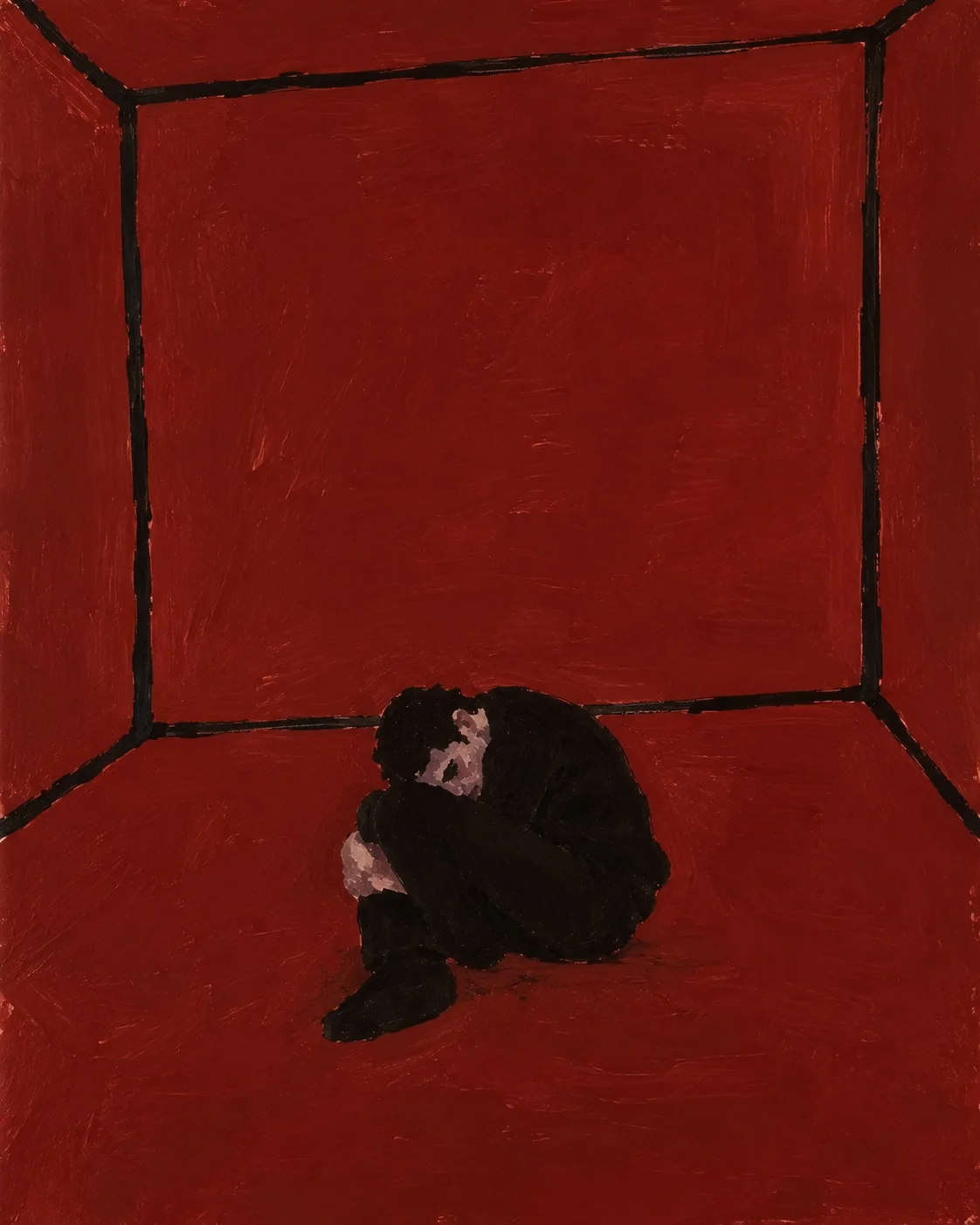
Because I never truly left it. The room is one of the originating places of my research: a concrete space, but above all a mental one. It can contain a person, two lovers, a memory or a loss; it can be shelter and prison at the same time.
Returning to it does not mean repeating a subject. It means measuring how I have changed, from the 2008 Rooms cycle to the 2024 rooms and The Gold Standard. In ROOMS, those passages are crossed by a new relationship with digital painting and artificial intelligence. Once a figure enters this space, it is left facing itself.
Is solitude a sentence or a form of knowledge?
It is both. Solitude can be pain, abandonment and the impossibility of communicating, but it is also the moment when things are no longer covered over. It reveals what a relationship has left behind, what love promised and what it failed to keep.
I do not want to treat solitude morally. Some solitary people seem protected by their silence, while couples standing very close are already far apart. Sometimes the most radical distance appears between two bodies sharing the same room.
What remains of adolescence in maturity?
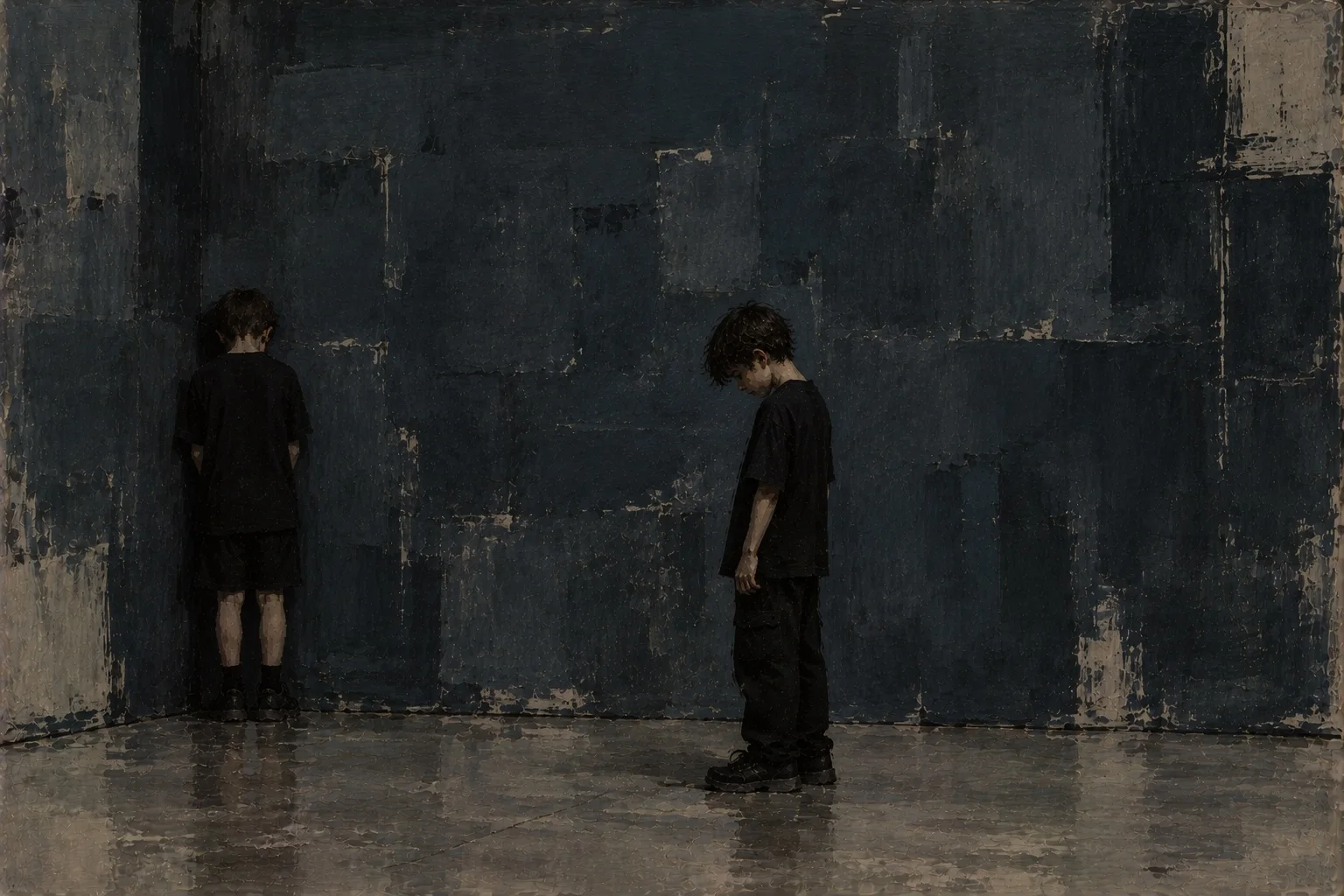
Adolescence is the age when everything happens for the first time and seems destined to last forever: desire, fear, a changing body, the need to belong to someone and to separate from them. It is an exposed age, without stable defences.
The young figures in ROOMS are not idealised. I look for the instant when words are not yet sufficient and the body speaks instead: it bends, closes, looks at the floor, sleeps, approaches another body or turns away. Maturity does not erase that condition; it recognises it.
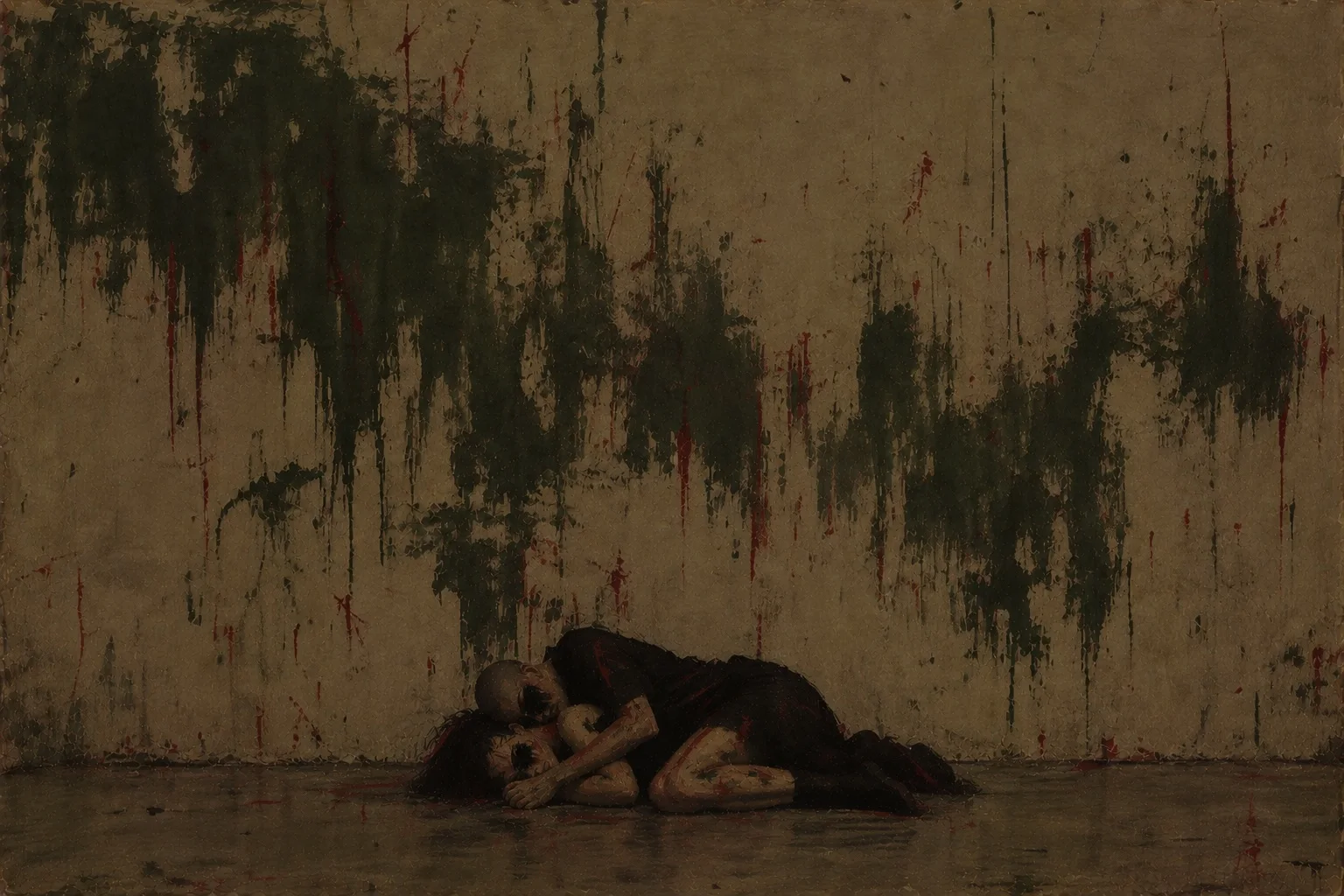
Are the beginning and the end of love truly opposites?
Not entirely. At the beginning of love there is already a fear of loss. At the end, something of the beginning remains: a gesture, a smell, the memory of a room, the shape of a body beside ours.
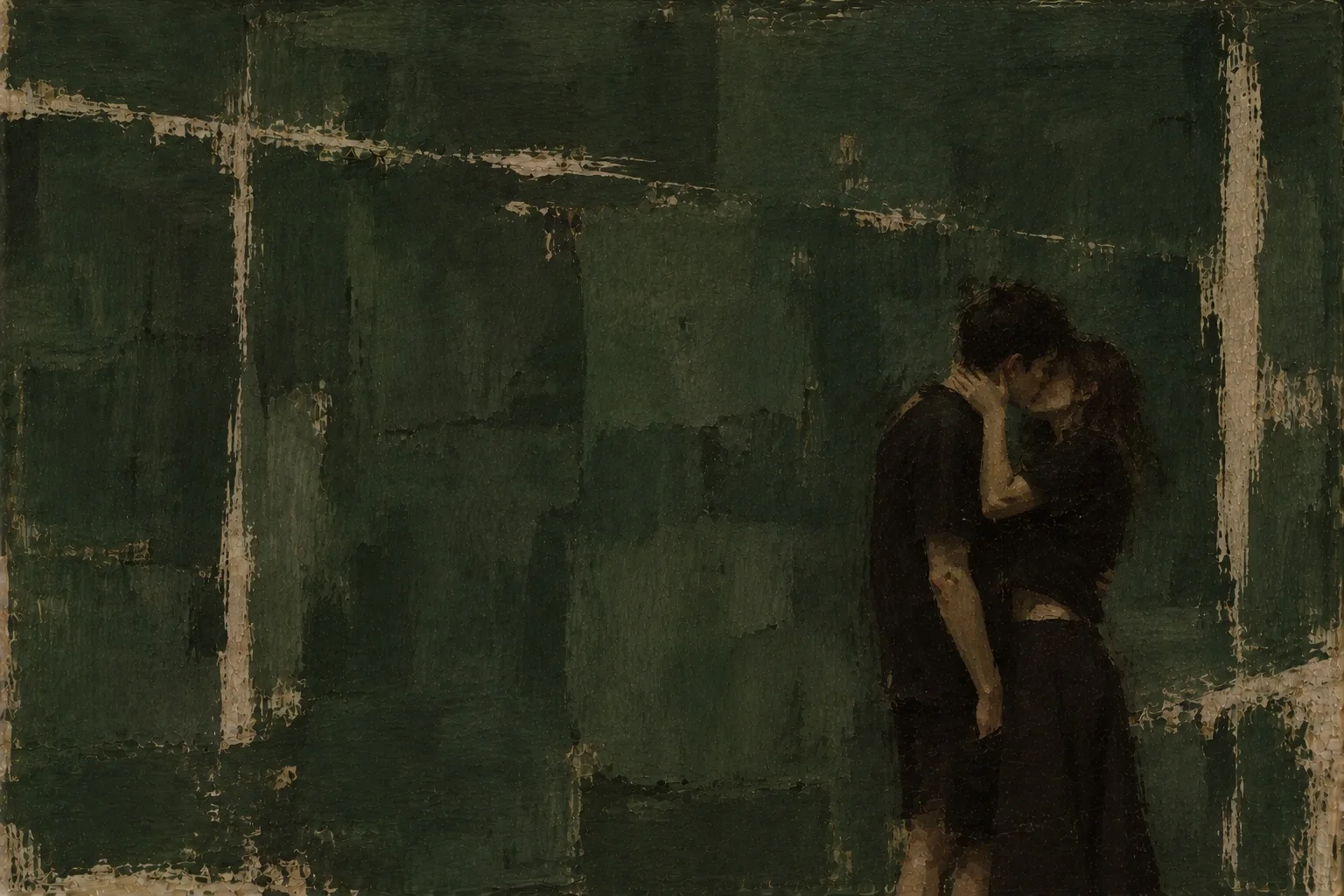
I am interested in the border where promise and mourning touch. A kiss may contain a farewell; two people sleeping together may be united or already unreachable. Titles such as The Kiss, Sleeping Together, The End of a Love and The Farewell name states of consciousness rather than simple episodes.
What do the distances between bodies tell us?
They tell us that physical proximity does not always coincide with emotional proximity. Two people can occupy a few centimetres and live in very distant worlds; an absence, by contrast, can continue to fill the entire room.
The body is a field of truth. Posture betrays what words do not say: a lowered head, a hand that does not reach the other, a figure sitting too far from the centre. I try not to turn suffering into spectacle; the image must retain mystery and allow viewers to recognise something of their own.
What is the negative tear?
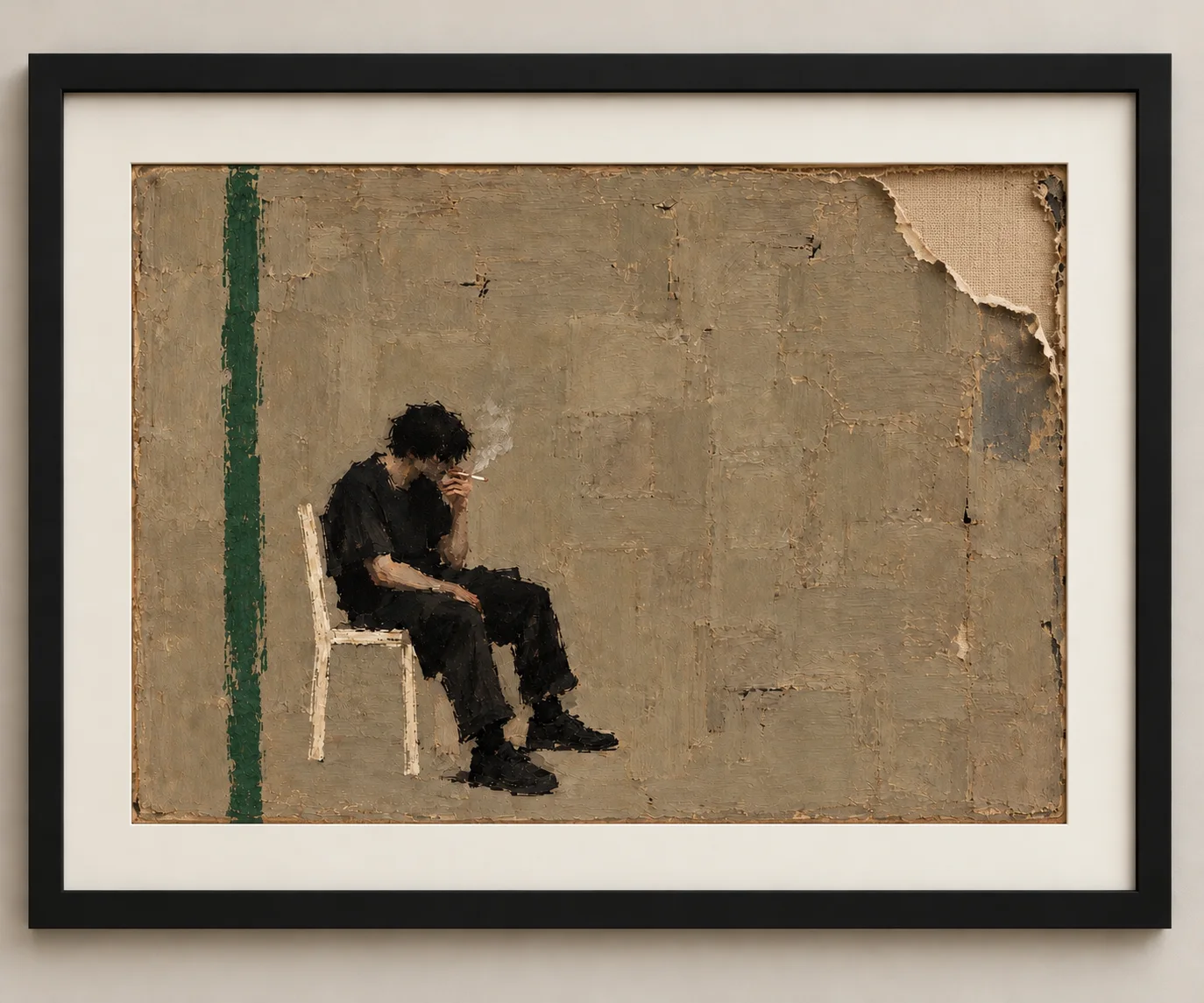
When the work reaches paper, the image recovers a body. It has an edge, a surface and a vulnerability; it can be touched and wounded. This is where a potentially reproducible image enters a physical, unrepeatable condition.
Tearing has always run through my work. In the past I painted on lacerations; in ROOMS the relationship is reversed. The tear becomes negative: instead of adding material to the wound, I remove part of the image. I remove in order to make each work unique.
In The Sleepers, is the gold leaf a repair?
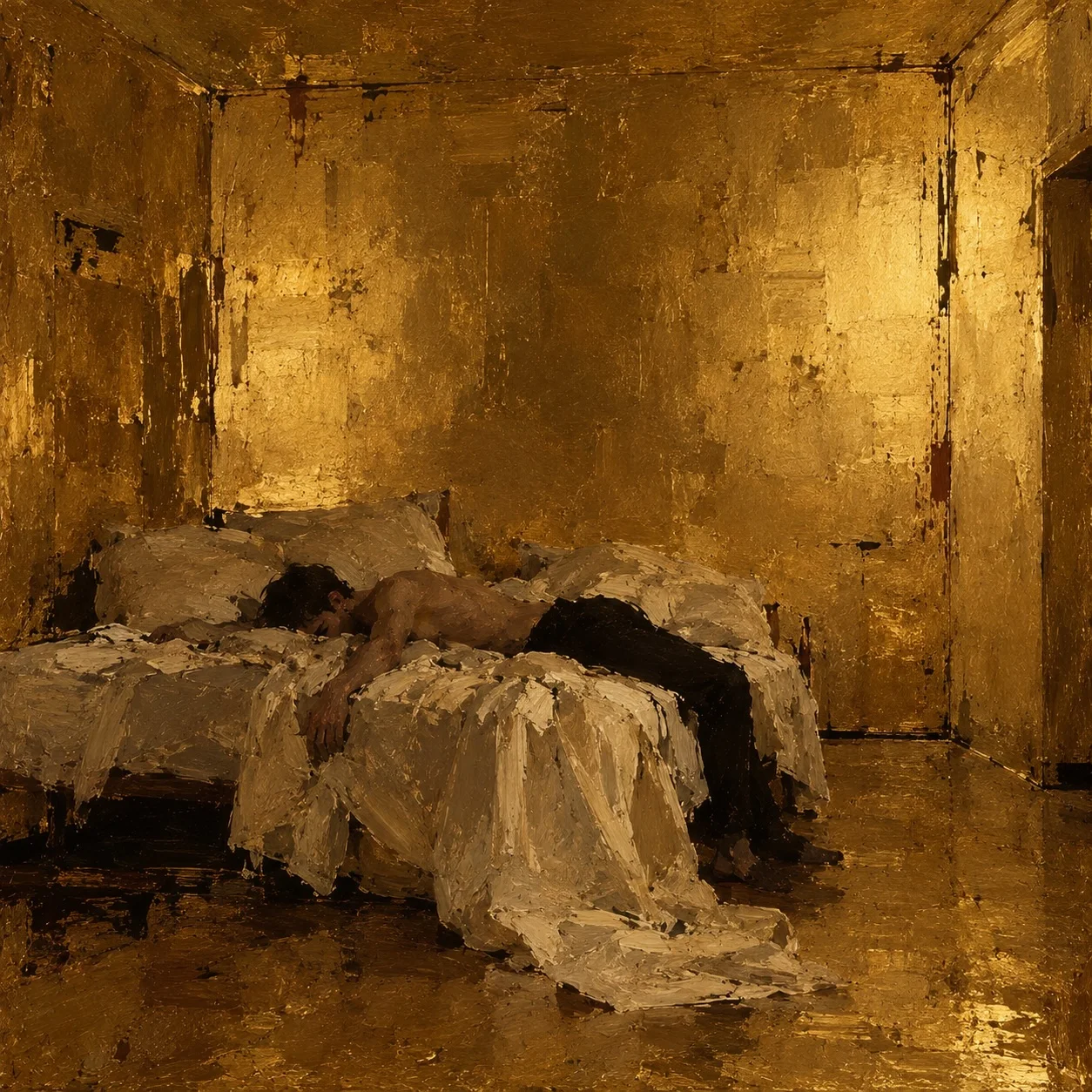
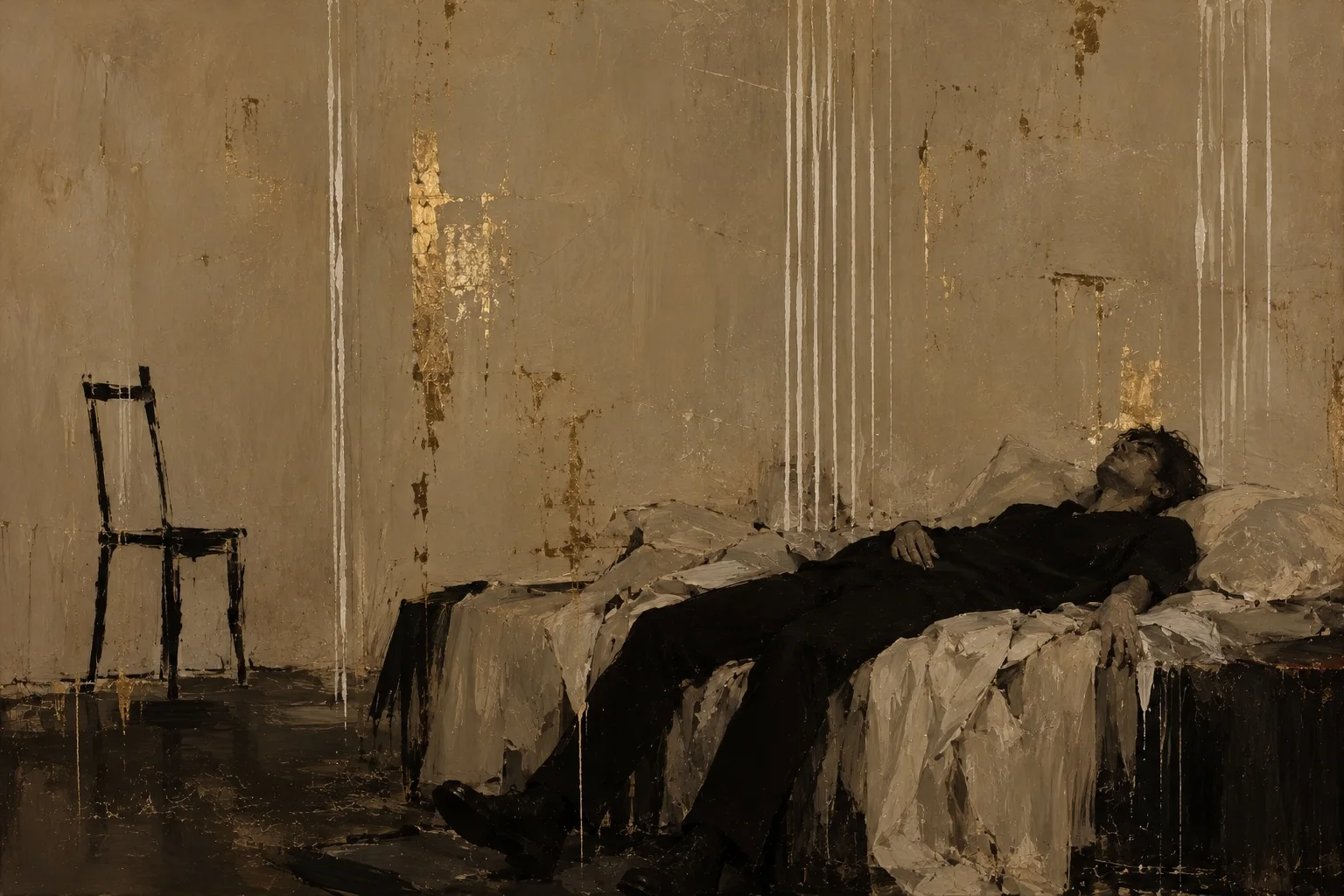
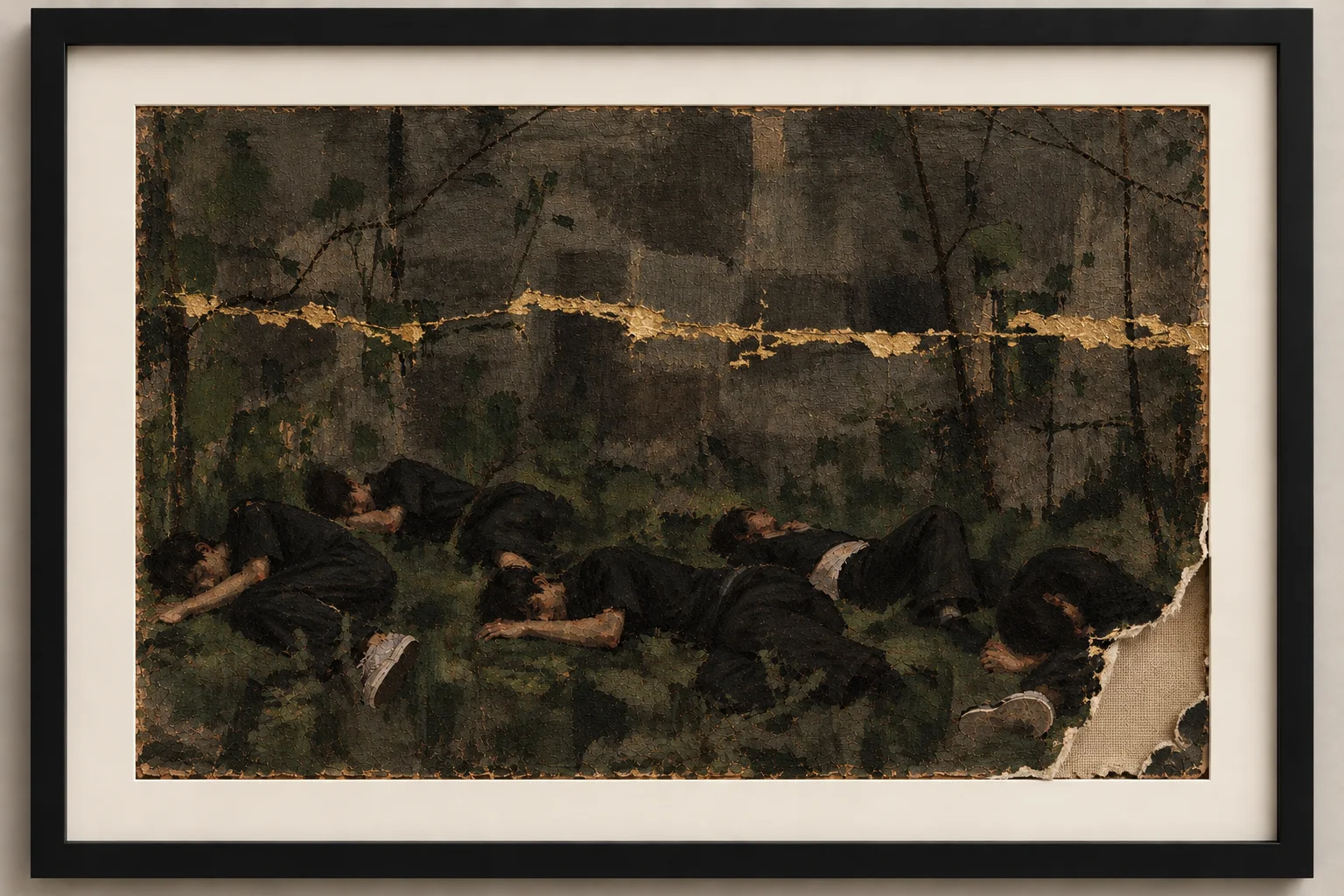
It is a repair that does not erase the wound. The patch holds things together, but it remains visible. It does not return the sheet to its former innocence; it declares that something has happened.
Gold leaf turns the vulnerable part into the luminous point of the work. In The Sleepers the bodies are defenceless, suspended between presence and abandonment, and the gold line crosses that fragility like a suture. It does not promise that everything can return to what it was.
Why do red, black and gold return so often?
They are colours and symbols at once. Red can be desire, wound, passion or alarm. Black absorbs and retains; it gives weight to bodies and silence. Gold introduces a light that is not reassuring: value, sacredness, repair, and the human need to make precious what has been hurt.
I do not assign them one fixed meaning. In the red room a figure may seem protected or imprisoned; in the gold room light can be splendour or absolute exposure. I am interested in this instability.
What changes with digital painting?
The space in which the gesture takes form changes, not the need that causes it. Digital painting lets me work where matter and immateriality meet. The image can be transformed, questioned and pushed towards possibilities that were not entirely visible at the outset.
The point is not to celebrate a tool, but to understand what it makes possible within my research. Rooms, bodies, red, black, gold, love and solitude belong to my path. The digital does not erase them; it places them under a new pressure.
Why is AI “the machine that reads my subconscious”?
Because I do not see it simply as a machine that produces images. In my work it becomes a place of translation. I give the machine words, inner images, relationships and fears; it passes through them and returns them transformed.
In that transformation I may encounter something I recognise without having fully foreseen it. AI does not possess my experience or live my pain, but it can set connections in motion that force me to look differently at what I carry within. The question is not whether the machine has a soul, but what it reveals of mine when I speak to it.
Where, then, does authorship reside?
In the relationship, in choice and above all in the necessity from which the work begins. The image does not begin with the machine; it begins with what I feel compelled to face. Artificial intelligence enters a process that already has a poetic origin, recurring themes and a direction.
I do not want to pretend that the tool does not exist. Authorship means taking responsibility for the final image: for what it shows, what it excludes and what it leaves unresolved.
“My words transmit my soul at 300,000 kilometres per second”: what does that mean?
It is an attempt to describe a paradox. Words enter the machine at the speed of light, yet what they carry may be ancient, slow and buried. An adolescent memory, the end of a love or unresolved suffering can cross a system in an instant.
Speed belongs to transmission; inner time belongs to the soul. ROOMS is also born from the collision of these two temporalities. The machine responds quickly, while the returned image can make me stop before something that comes from very far away.
What kind of gaze do you ask of those who enter these ROOMS?
A slow gaze. I would like the viewer not to look immediately for plot or explanation, but first to remain with the bodies, their distances and the emptiness around them.
Here the digital and the physical cease to be opposites. The image can emerge through words, digital painting and AI, then meet paper, the tear, the edge and gold. These rooms do not belong only to the represented figures: they may reopen one of the viewer’s own rooms—first love, farewell, adolescent solitude or the maturity with which we now look back.
Sources and further reading
Sources allow readers to verify and explore. Official artist links are part of the feature, not an appendix.
 ADV
ADVAcquistare Arte recommends: Resin-sealed books, words and layered images turn melancholy into a material narrative.
Painting · memory · collage
Open profile ↗