Digital art · Inside the work
Hikikomori. Sixty-four rooms, a door that concerns us
Inside Massimo Scognamiglio’s interactive artwork: seventeen experiences linking solitude, memory, cinema and computers. An illustrated journey and a map of digital art institutions worldwide.
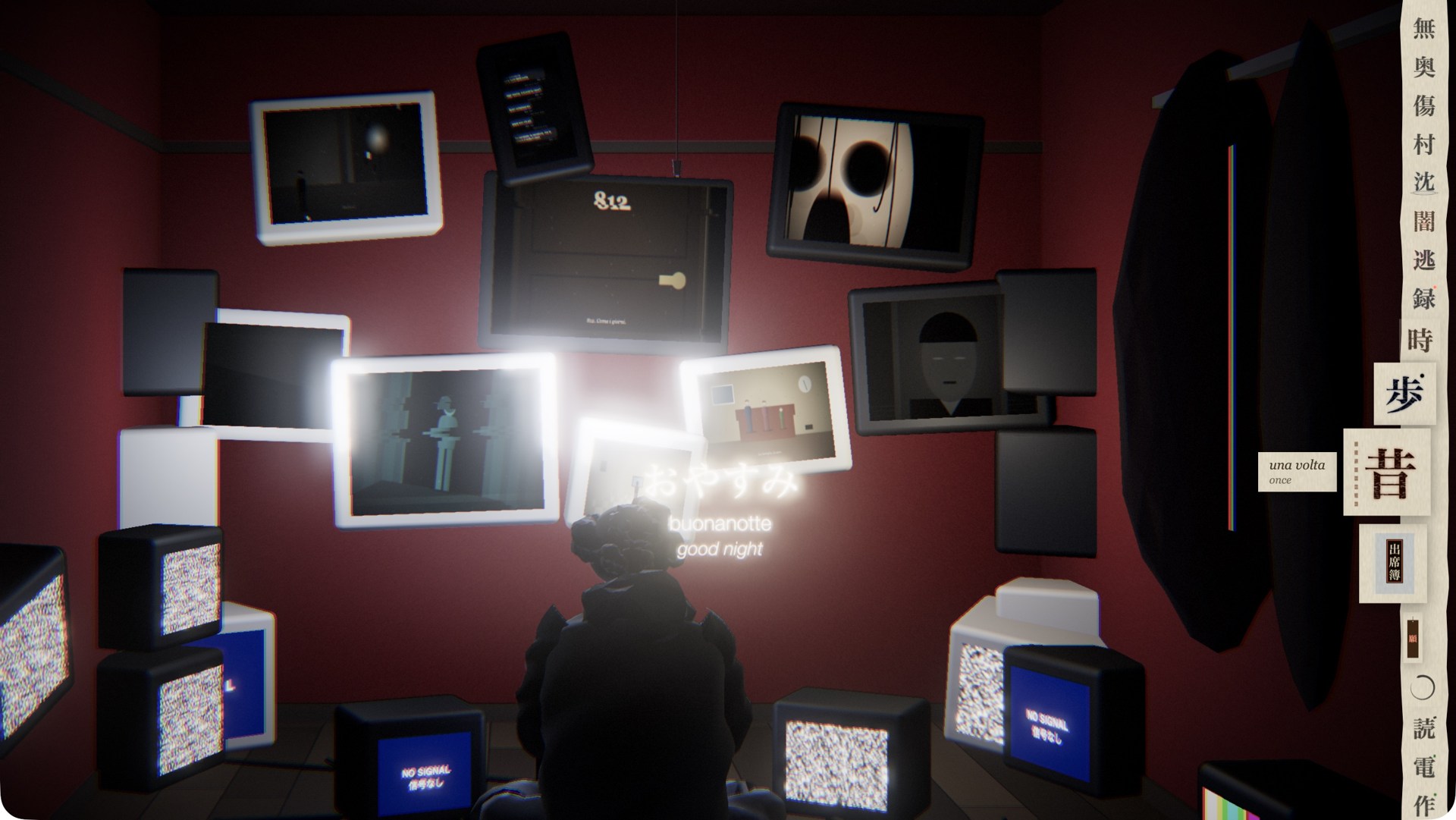
Two ways to approach the work
OPEN THE INTERACTIVE ARTWORK →Computer and sound recommended. Explore with a mouse; optional webcam access is your choice in the browser.
The Void · from DON’T LOOK
Text and description
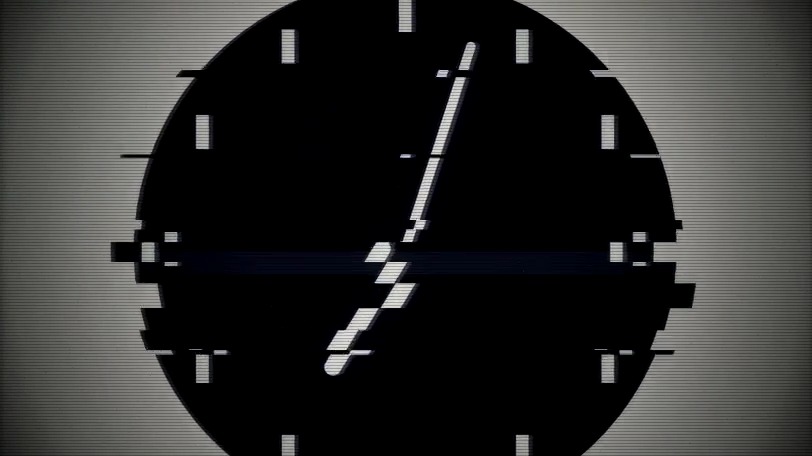
Text in the excerpt: “Every evening, at the same time, the square.” Then: “Seven o’clock.” The urban landscape changes through cuts, interference and colour shifts.
The rooms · archive video
01. Before the door
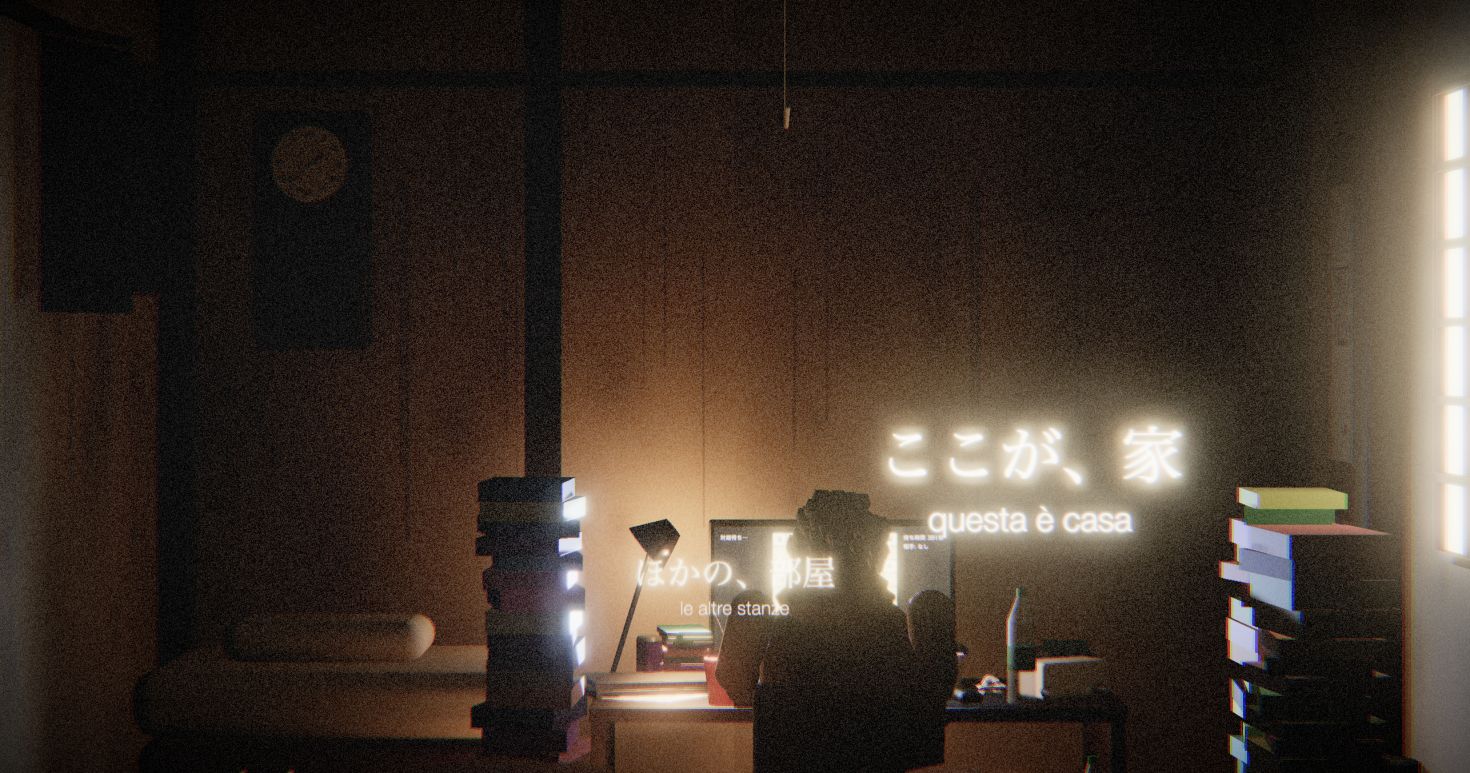
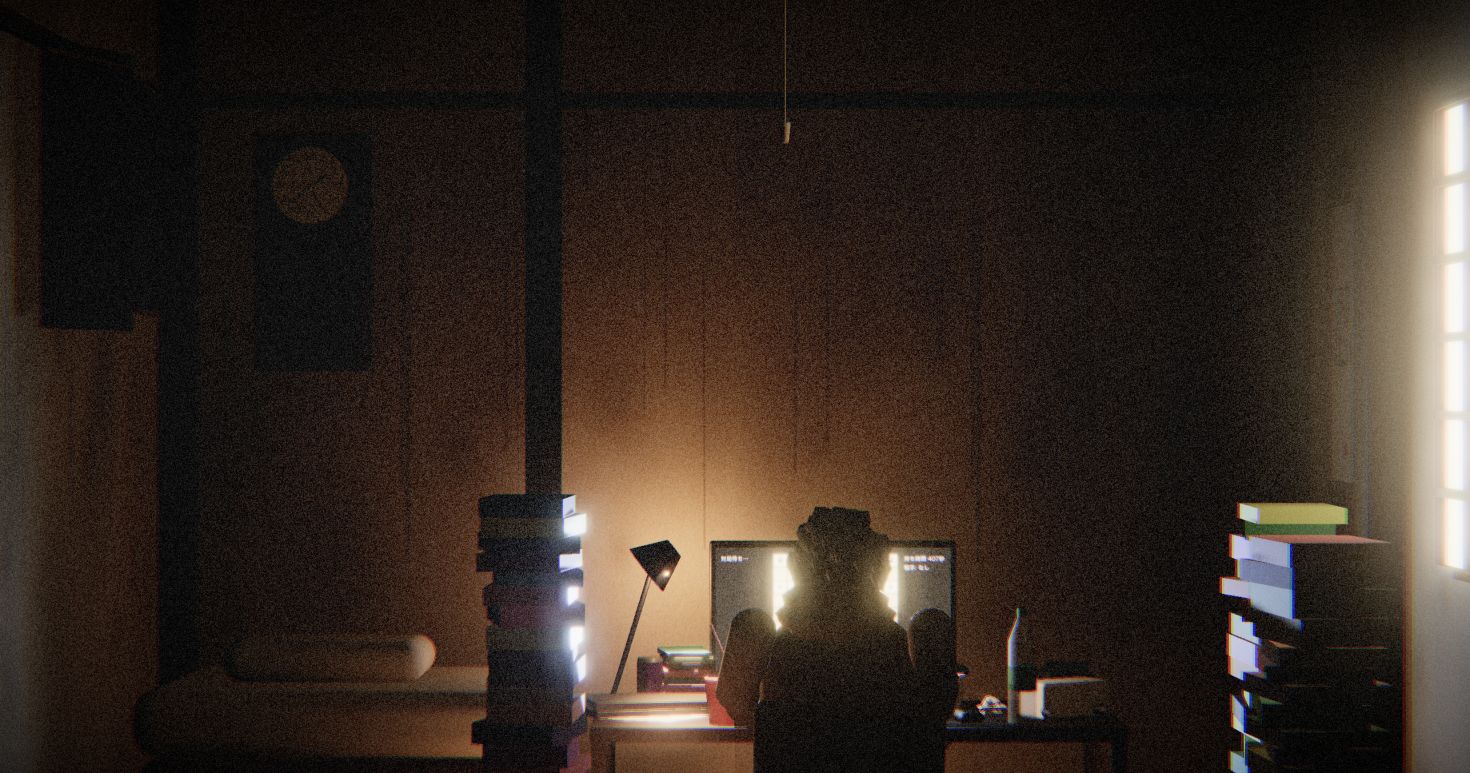
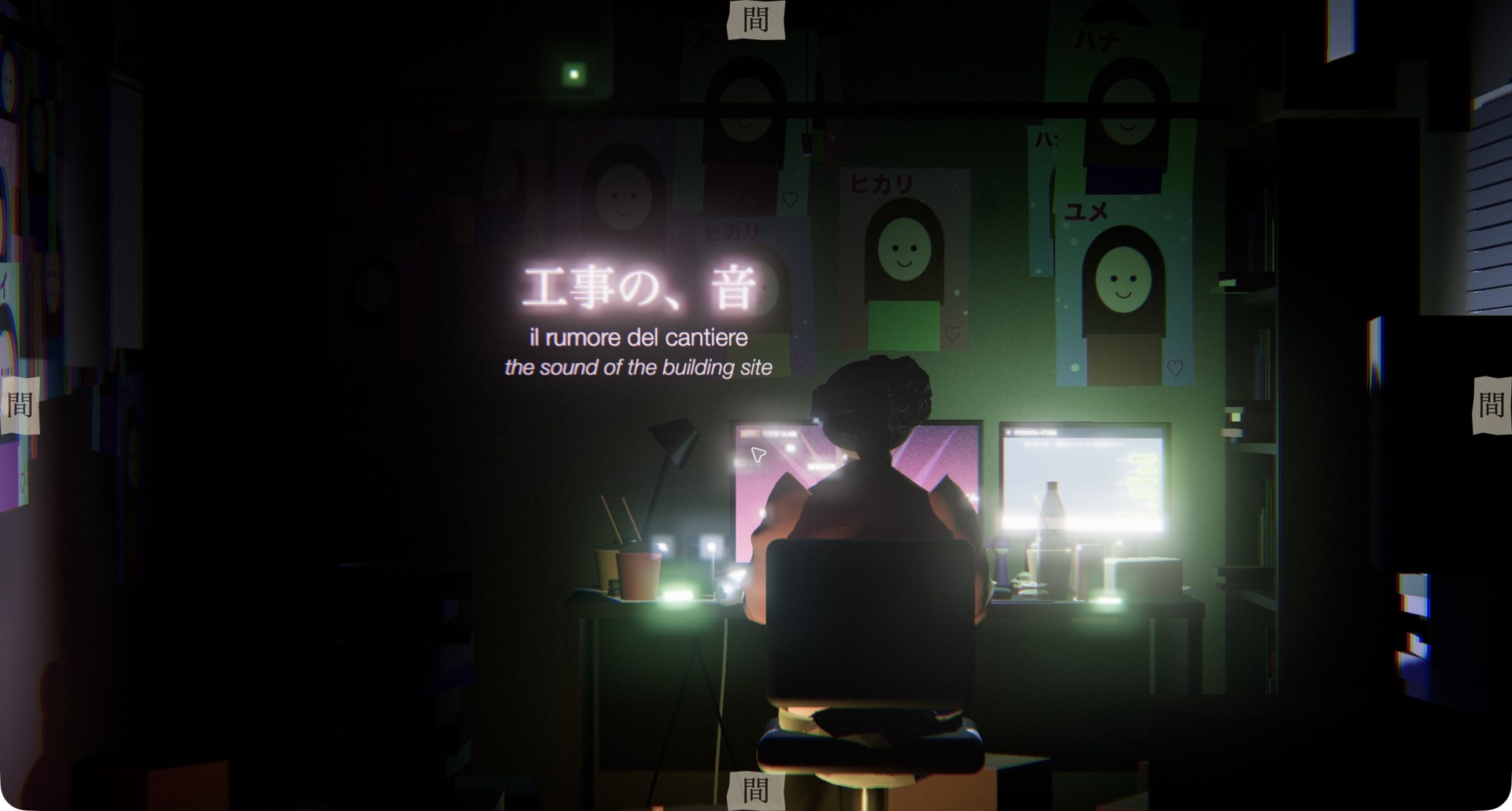
The first thing to offer is time. Hikikomori, the interactive artwork by Massimo Scognamiglio, opens with a green-phosphor terminal: a Japanese word, a few instructions and an invitation to enter. The computer seems to belong to another era; the unease it stages belongs to the present. Behind the screen are sixty-four rooms, each with a figure, a light and a different way of remaining apart.
Social withdrawal is the starting point, encountered here through an artistic construction. This is neither a clinical case archive nor a collection of field testimonies. It is an imagined space in which a domestic interior becomes a question about our willingness to look.
02. The room as portrait
Scognamiglio returns to an architecture that has long run through his practice. In the STANZE cycle, and in the interview published in this magazine, distances between bodies and walls replace many psychological explanations. In the interactive work that distance becomes navigable: moving your head or mouse changes the point of view.
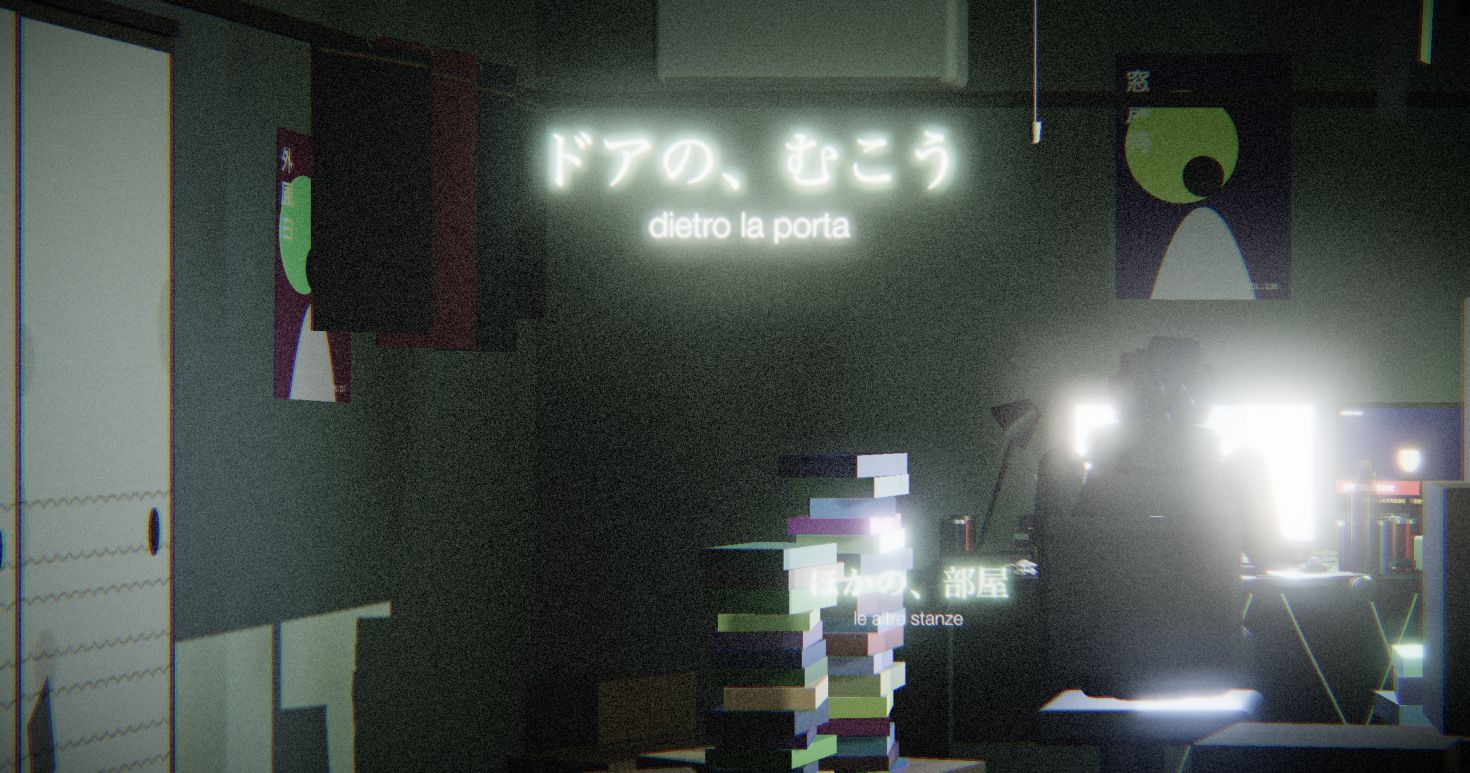
Books, monitors, posters, boxes and clothes are not neutral furnishings. They form a portrait through the things surrounding a life. Accumulation protects and suffocates; a television illuminates without warming. Repetition carries its own weight: similar rooms do not erase differences between their occupants.
03. Attention is the interface
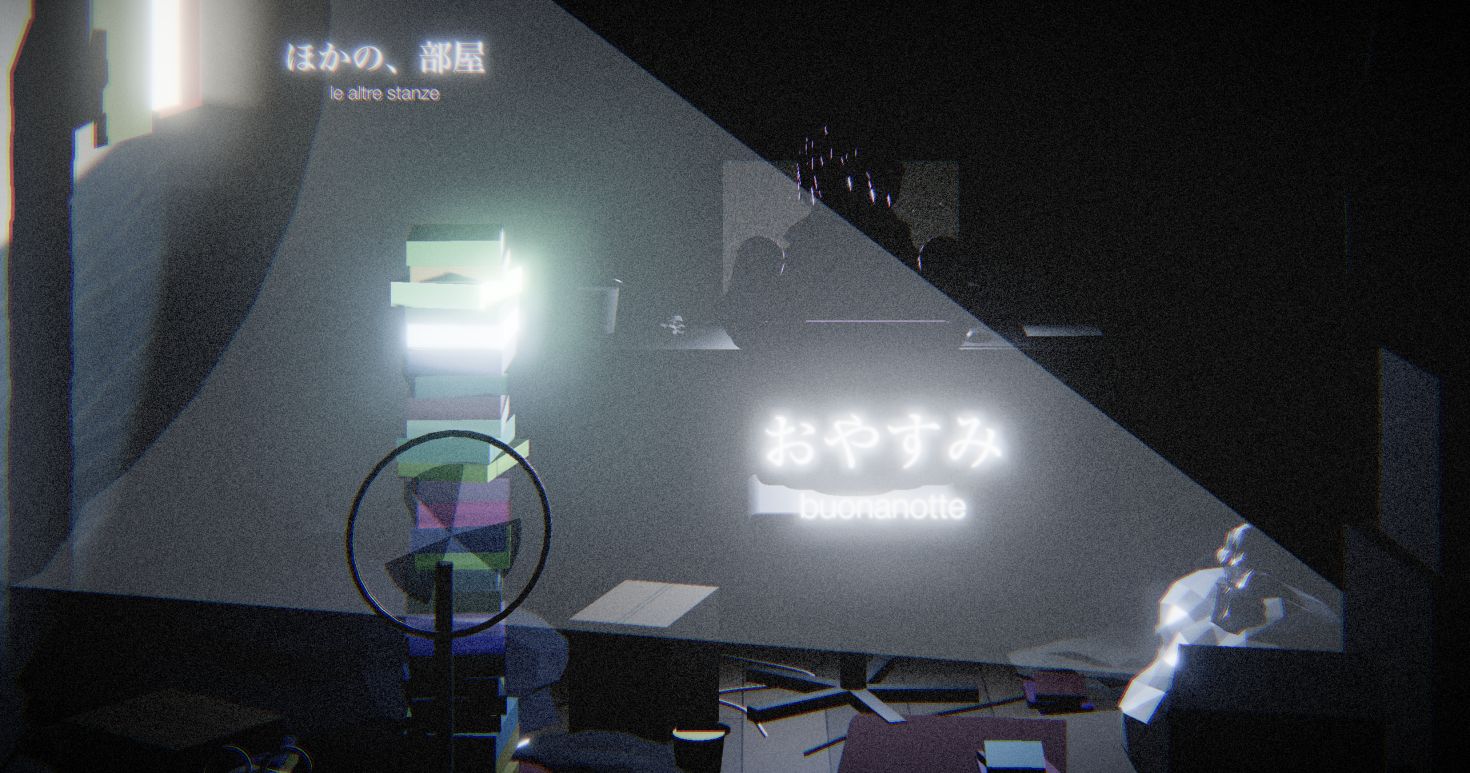
Wait, and a sentence appears. Rest on it, or click it, and you move elsewhere. Signs emerge at the screen’s edges: seventeen experiences, plus the credits. This grammar is learnt through the body, by approaching, lingering and trying. The time spent reading changes the path.
A photograph of this experience can show a room; it can scarcely convey the relationship between hesitation and discovery. That is why the link to the work matters as much as these images. The smallest gesture — holding a pointer still, touching a sheet, choosing a monitor — can change the nature of the space.
04. Outside: city and village
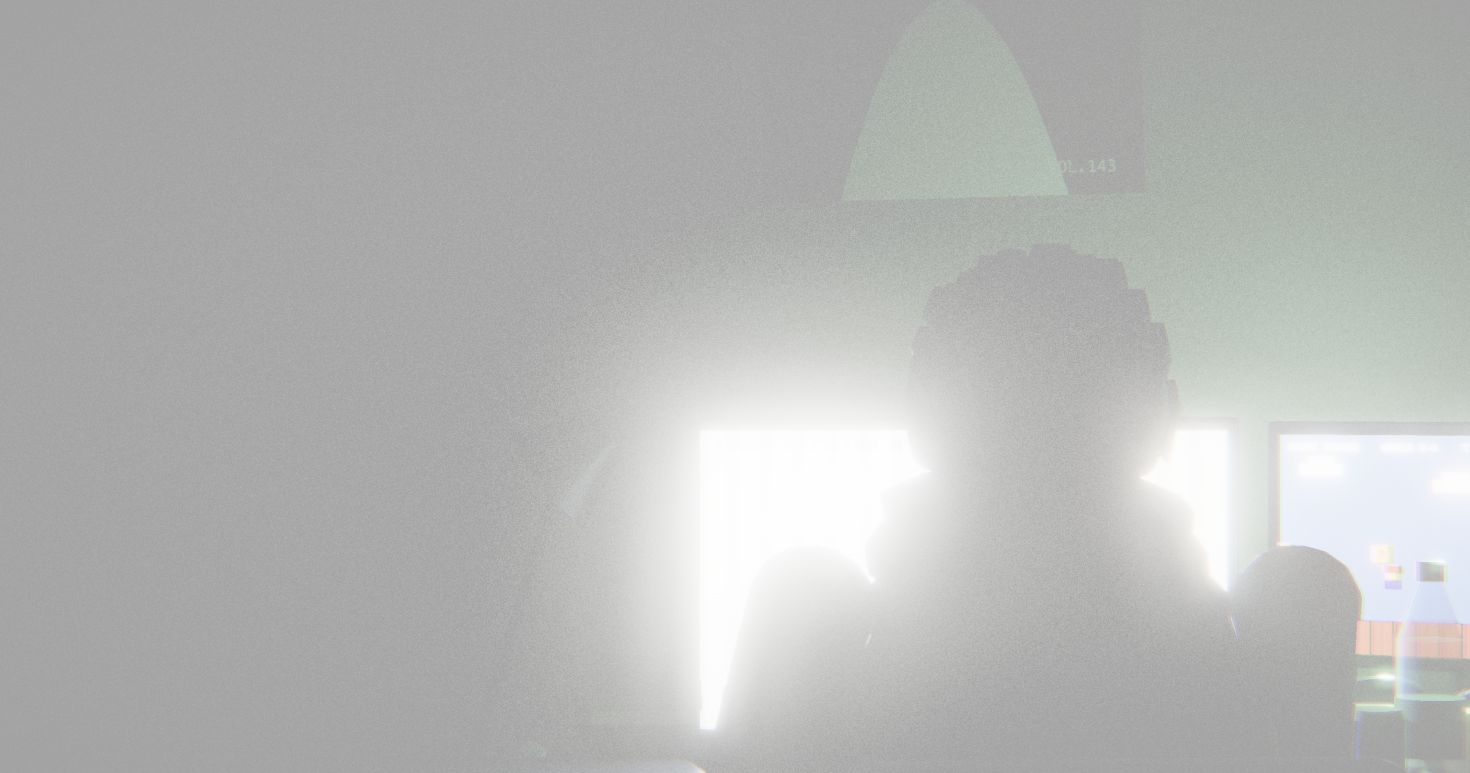
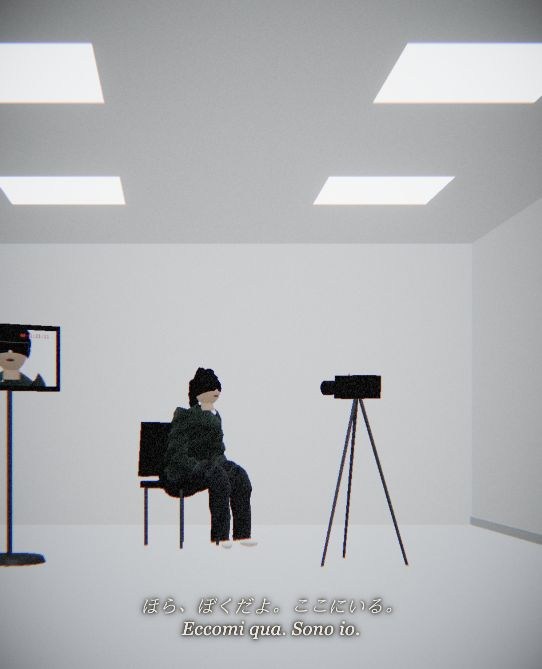
In 無, Outside, the ceiling flies off and the walls fall. The figure remains seated in a Tokyo crossing, exposed to crowds and weather. The room disappears, but the posture survives. The image leaves a question unresolved: how much distance remains when the material barrier has been removed?
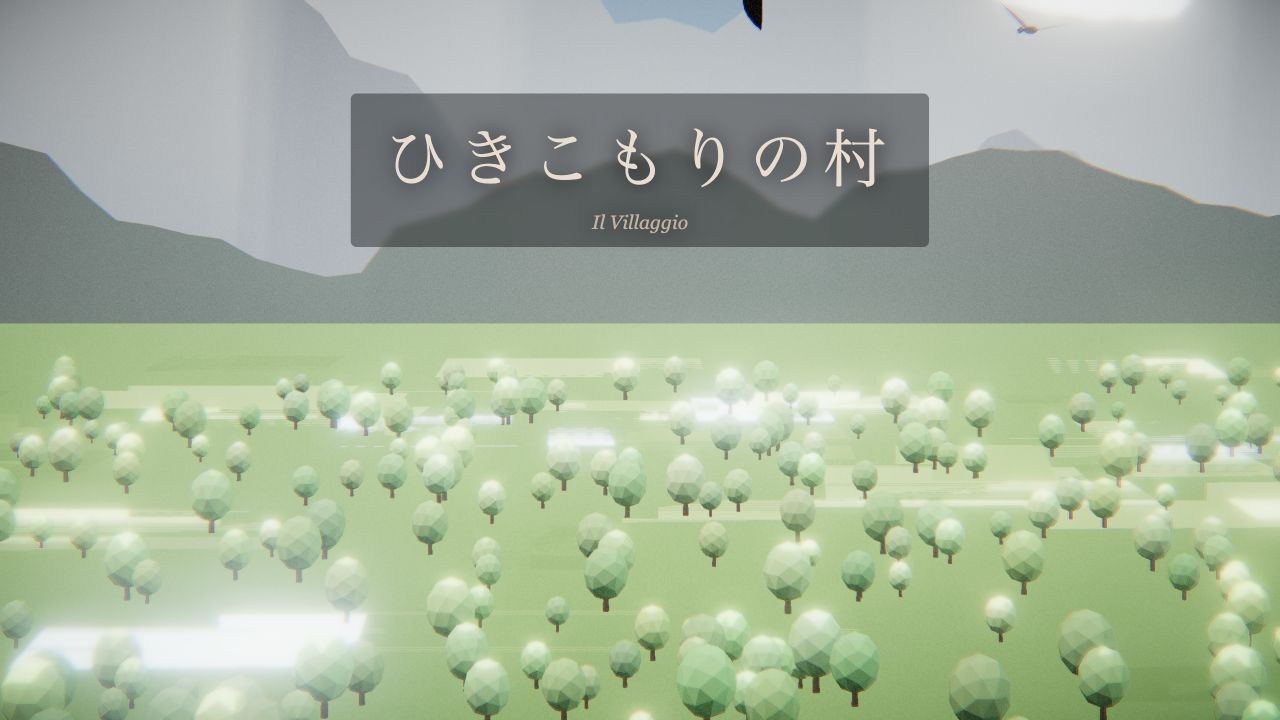
In Village, 村, the perspective widens further. Sixty-four roofless rooms appear in a green valley; you can descend into each. Together they reveal a proximity impossible to imagine from within. Further Inside, 奥, reverses this opening: one room seen from above in a barren landscape, accompanied by a single word concentrating its drama.
05. Forty years in one minute
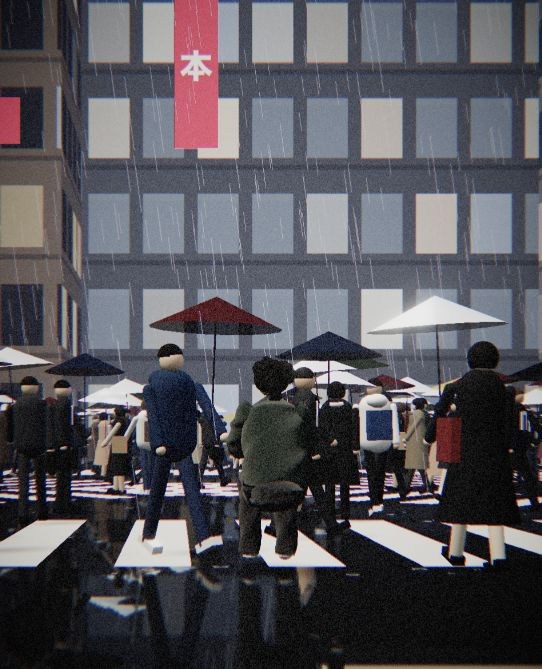
時, Time, compresses forty years into a minute. The parents age beside the figure while the room’s arrangement maintains the appearance of continuity. Duration becomes a visible pressure: each passing moment adds something that cannot be recovered. When time stops and the protagonist turns, movement arrives after a long stillness.
Editing becomes the work’s true environment. The room is also the place in which those waiting on the other side of the door grow old. Bach’s Goldberg Variations accompany a disproportion: the minute we can offer and the years the characters cannot regain.
06. The register, the children, the night
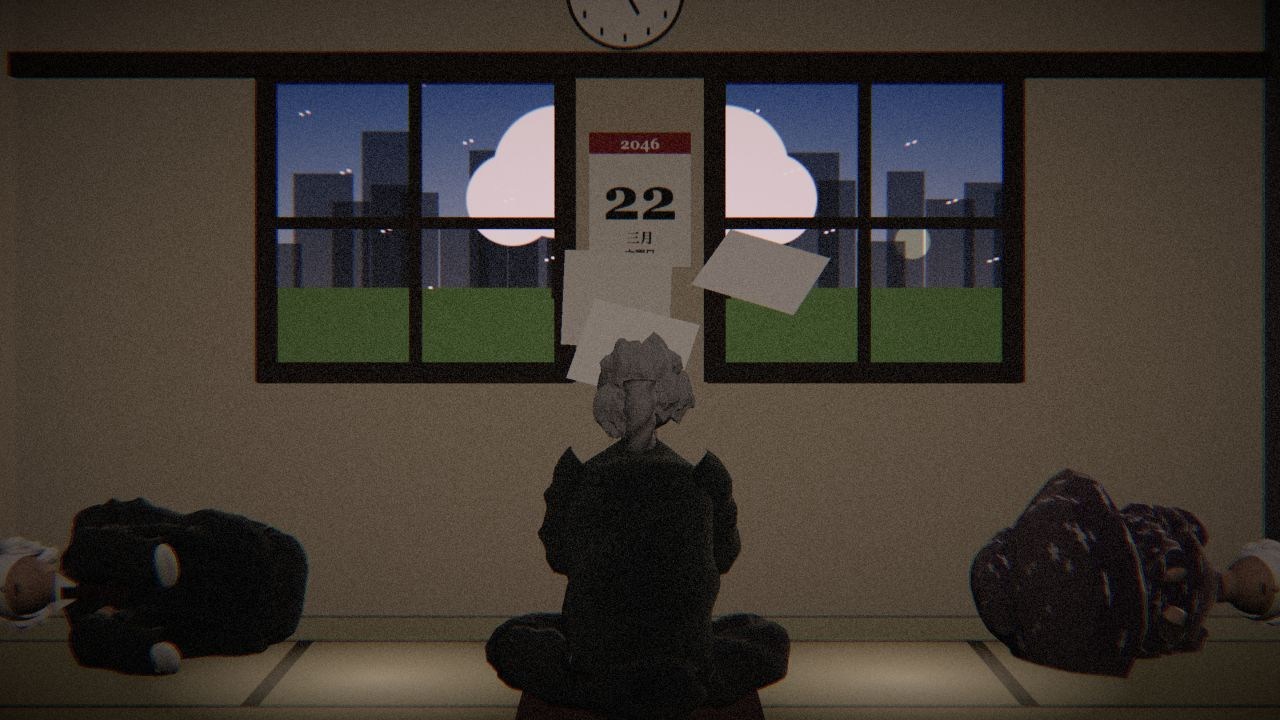
In the class register, 簿, names, absences and assessments give absence an administrative structure. Clicking a row leads to a room. The link is simple and cruel: an apparently abstract box takes us to an inhabited space. Holst accompanies the register’s order with an unease that contradicts its tidy surface.
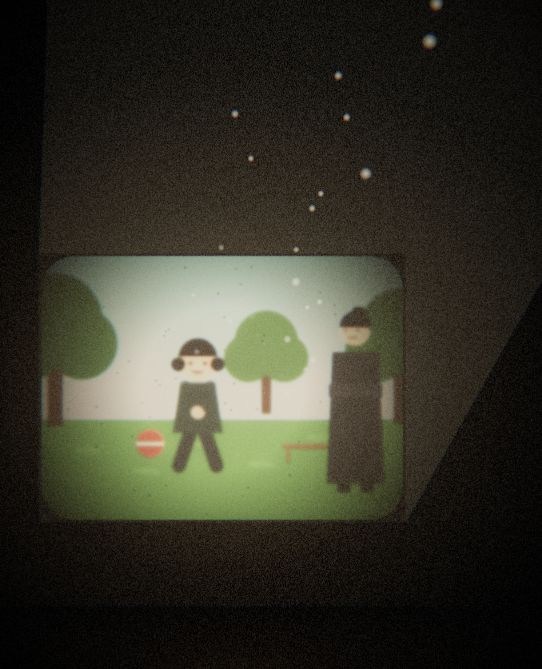
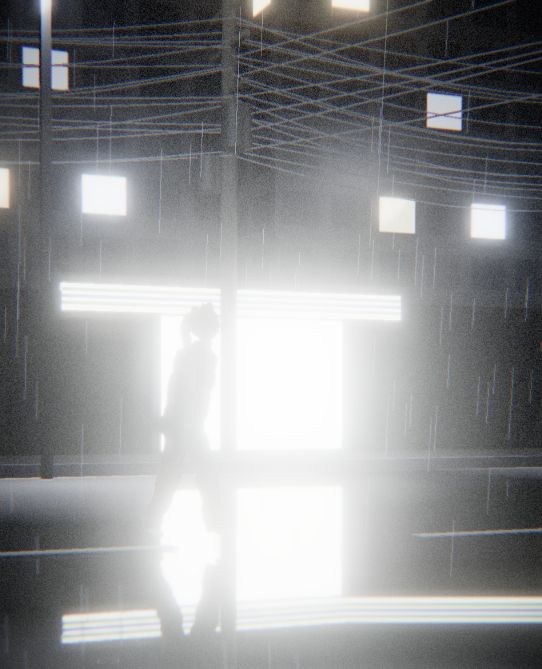
Once, 昔, returns to childhood through Super 8 projections: a park, a mother, further images multiplying on the walls. Three in the Morning, 歩, instead crosses an empty Tokyo through rain, fog, neon and temples, ending in a jazz bar. Childhood and the night city become two ways of searching for a life that seems to have moved away.
07. The wound and the sea of things
傷, The Wound, introduces photographs of Hiroshima and Nagasaki from 1945–46 and statements accompanied by their sources. Collective history changes the interior’s scale: falling images remain in the room, materials the present cannot absorb. The relationship between historical injury and individual experience remains the artist’s poetic choice, open to examination without conflating distinct events and conditions.
沈, Underwater, sinks the interior into a sea of products and rubbish. Things that once filled the space become the element into which it descends. Consumption ceases to be background and takes the form of a landscape, accompanied by Bach’s cello.
08. The cellar and the drawn door
A hatch leads into 闇, The Cellar: fears arrive individually, then gather into a crowd. Tōryanse and Kagome add an unsettling childhood memory to the underground space. A television on the floor opens a zombie manga: another screen within the screen, another mental room.
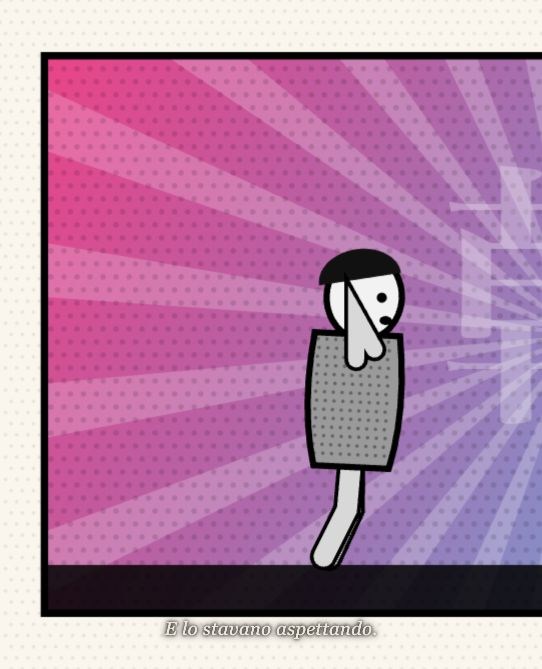
In 逃, Escape, the protagonist draws a door on the wall and enters a pop manga, pursued by duties. Tearing the page opens a forest, a river and a sunset. The passage between visual languages is part of the story: drawing becomes a possible opening, and paper a surface that can give way.
09. DON’T LOOK: cinema inside the room
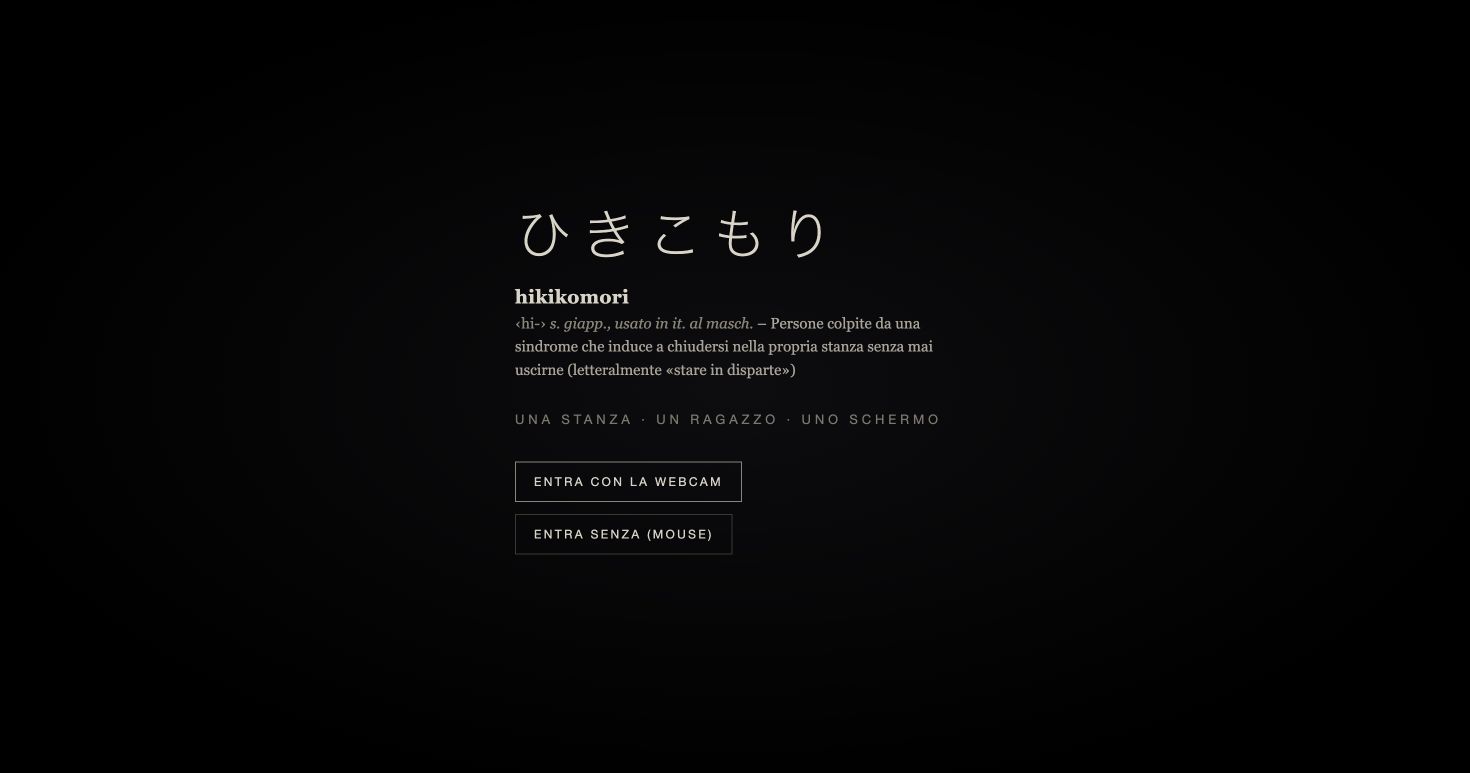
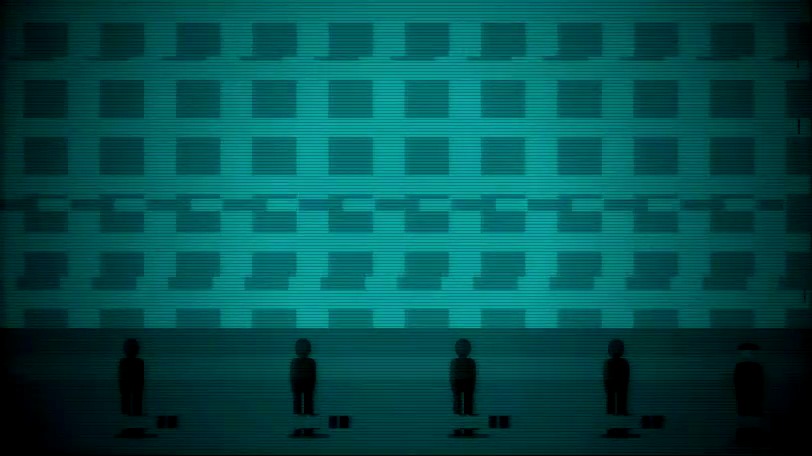
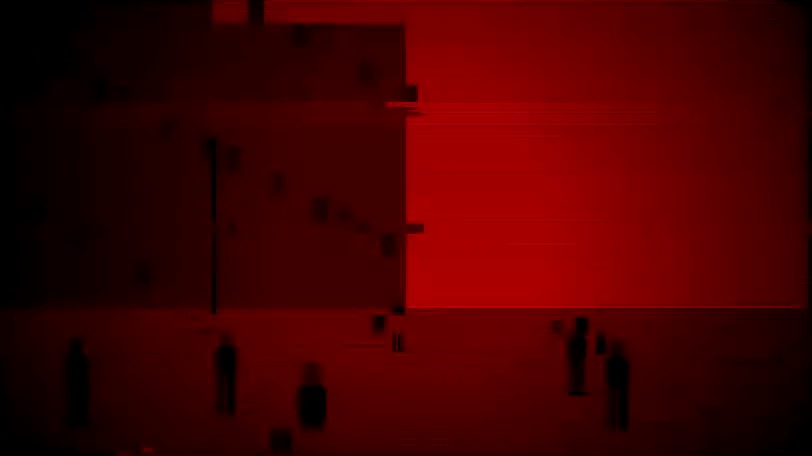
Room sixty-four is red and filled with screens. 怖, Don’t Look, hosts nine original unsettling films, described by the artist through references to Antonioni, Fellini, Lynch and Kubrick, alongside Are You There? These are references to atmosphere and language: the monitors do not screen a selection of those directors’ films. Previews coexist; choosing a screen opens the full film.
This small cinema disperses the gaze. A face, corridor, mask or sentence no longer belongs to a single linear story: they become simultaneous presences surrounding the seated figure. The images here document a few moments; duration and voices are encountered by entering the work.
10. Pages as large as sheets
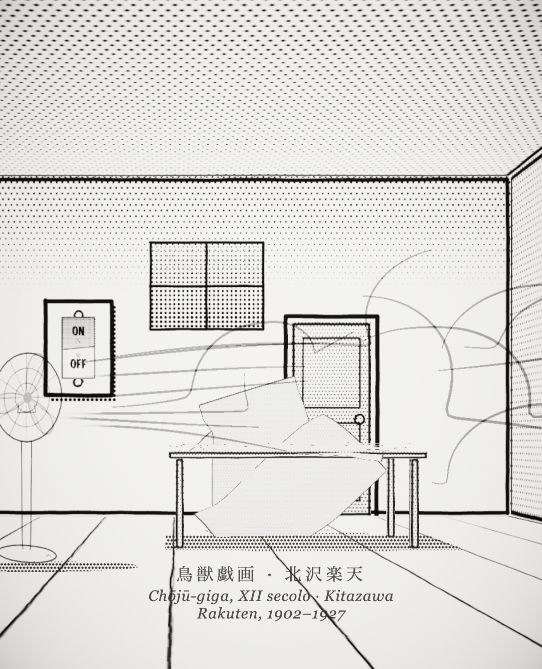
読, Readings, radically changes the visual material. The room becomes a box drawn in marker; a fan blows enormous pages from the medieval Chōjū-giga and images by Kitazawa Rakuten. You can switch the fan on and off, bring a page closer and return through a painted door. Reading acquires a physical, almost comic dimension.
The relationship between old and digital passes through the air. A historical image becomes a moving surface occupying our present. Formal surprise offers a pause in the darkness of other rooms: an archive can also be entered with curiosity and play.
11. An Apple ][ to the soul of the universe
電, The Computer, leads to a bright room with Tokyo outside the window and an Apple ][. The film about solitude is only the first layer: clicking the screen enters pixels, electrons and finally what the project calls the soul of the universe. The diskettes instead open a CATALOG containing a diary and three photographs: family, her and the class.
Personal-computer archaeology meets an immense question. The old device promises both the intimacy of a secret and an immersion beyond matter. Eight-bit music holds these scales together, while the green credits return us to the tangible surface of a monitor.
![Hikikomori · 電 · The Computer, an Apple ][ and Tokyo outside](/media/hikikomori/scene-apple.jpg)
12. Who watches whom, and who builds the work
Under ○ the screens show the webcam image and the figure turns. The observer enters the relationship they were watching: the distance between viewer and character suddenly becomes unstable. Camera use requires the visitor’s permission; the rooms can be explored with a mouse. In Interview, 録, the protagonist instead gains a face that speaks, laughs and cries while words fill the image.
The artist explicitly credits the work as made with Claude. This identifies a tool in the process without exhausting decisions about direction, rhythm and composition. According to the artist’s information, photographs and classical recordings draw on public-domain and freely licensed material alongside original eight-bit melodies. Individual materials and attributions should be checked in the work’s credits.
13. A geography of art happening on screens
To situate such a work, it helps to follow places treating software as an artistic language. In Japan, YCAM and NTT InterCommunication Center offer references for research across images, technology and perception. In Europe, Ars Electronica, HEK, arebyte, Aksioma and IMPAKT offer ways into practices and discussions crossing different media.
In the United States, Rhizome, the Whitney’s artport, Gray Area, Beall Center and Harvestworks demonstrate different approaches to producing, presenting or preserving digital art. FILE in Brazil and National Communication Museum in Australia widen the map. These are routes for further exploration; their inclusion does not imply that they selected, supported or exhibited Hikikomori.
14. How to enter, and what to take away
Opening the work on a computer, enabling sound and setting aside a few minutes is a good start. Moving the mouse to the edges reveals signs for choosing experiences. Alternate a room with a scene, without turning the journey into a checklist. At the time this article was prepared, the work’s texts were Japanese and Italian; the artist announced English as forthcoming. This article’s five language editions are a separate publication.
For those following Scognamiglio, the documented biography places the experience within a practice spanning painting, photography, video, performance and writing. For collectors, it also raises distinctions between access, ownership and software preservation: visiting an online artwork is not acquiring it. Before the market comes a presence. Staying a few seconds longer, when closing the window would be the easiest gesture.
Works and visual paths
Sources and further reading
Sources allow readers to verify and explore. Official artist links are part of the feature, not an appendix.
 ADV
Acquistare Arte recommends: Resin-sealed books, words and layered images turn melancholy into a material narrative.
Painting · memory · collage
Open profile ↗