
Collecting performance · 01
Regina José Galindo: collecting performance through photography and video
Body, political violence and memory: what remains collectible after the action, from photographs and video to editions and documentation.
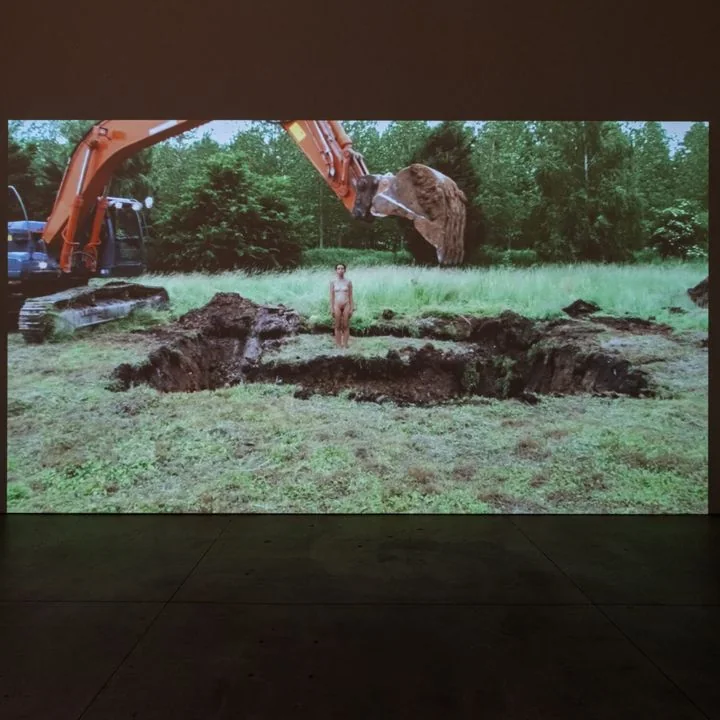
Who is Regina José Galindo and why does her performance matter?
Born in Guatemala City in 1974, Regina José Galindo is a visual artist and poet who uses her body to expose state violence, inequality, racism and gender violence. She received the Golden Lion for best young artist at the 2005 Venice Biennale; her official biography records documenta 14 and collections including MoMA, Tate, Centre Pompidou and Guggenheim.
In Who Can Erase the Traces? she walks from Guatemala’s Constitutional Court to the National Palace leaving footprints of blood. In Tierra her still body is surrounded by an excavator. Each image comes from a precise gesture, place and political responsibility.
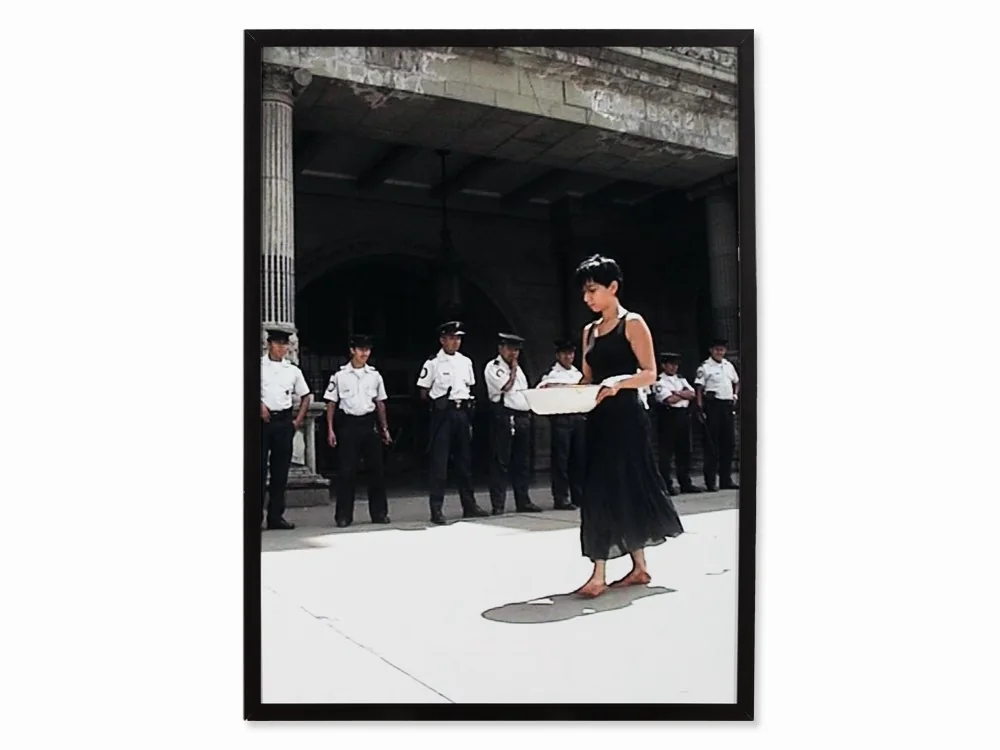
The performance ends; the artwork may remain
A performance is not automatically reducible to its photograph. The live action, video recording, artist-selected still and editioned print are different objects, with different duration, rights, formats and display conditions.
MoMA classifies Galindo’s works as performance and video, while Banco de la República describes Tierra as performance video. Museums acquire an identified work with title, year, medium, duration, edition, support and technical conditions—not an abstract memory.
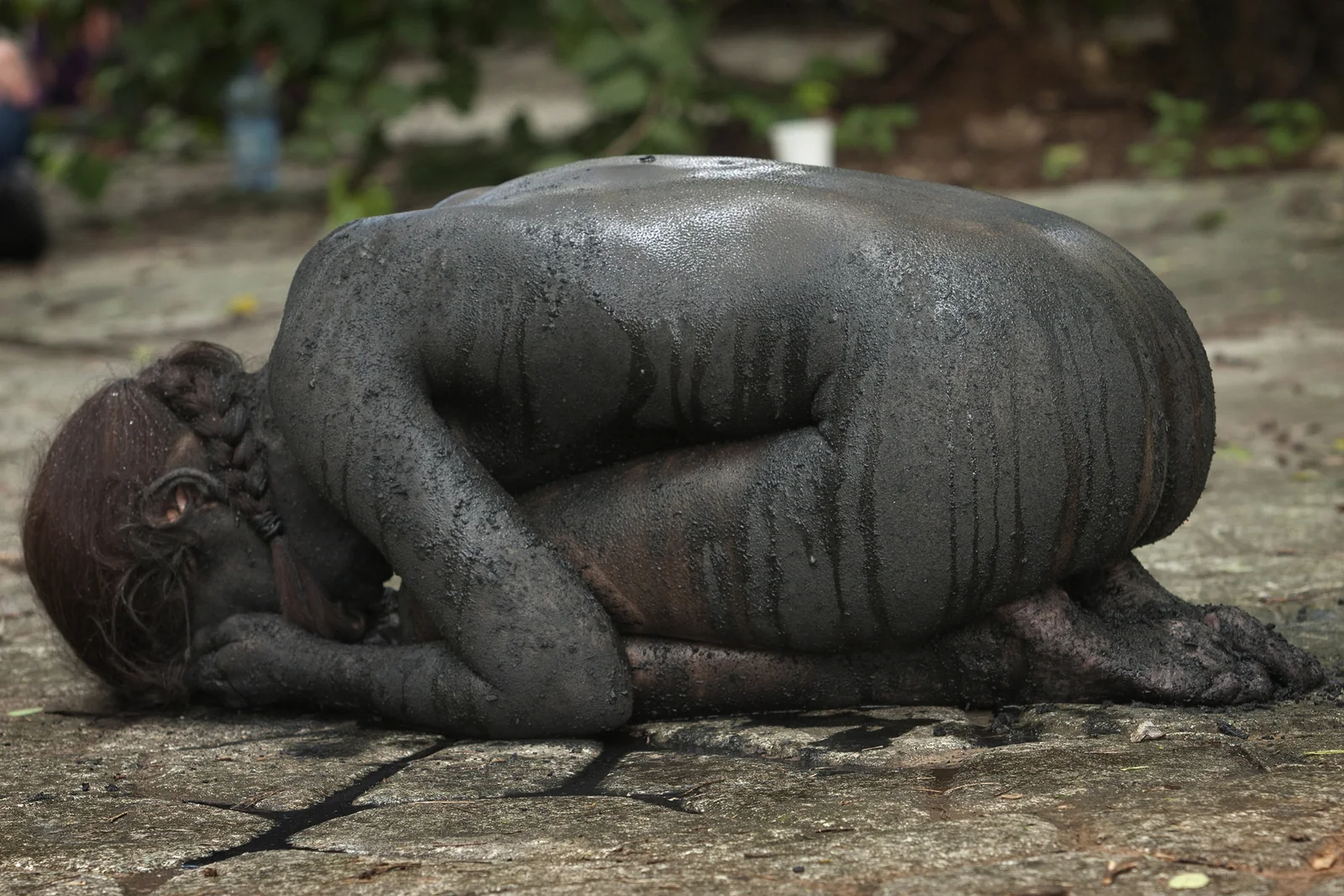
Photography, video and editions: what are you buying?
The market includes Lambda photographs mounted on Forex, prints in different formats and videos. Ask whether the image is an autonomous artwork chosen by the artist or press documentation, the total edition, artist’s proofs, and whether each format forms a separate edition.
For video, obtain master and exhibition files, duration, aspect ratio, codec, delivery medium, certificate and instructions. Clarify whether screen, projector and player belong to the work and who may approve future file migration.
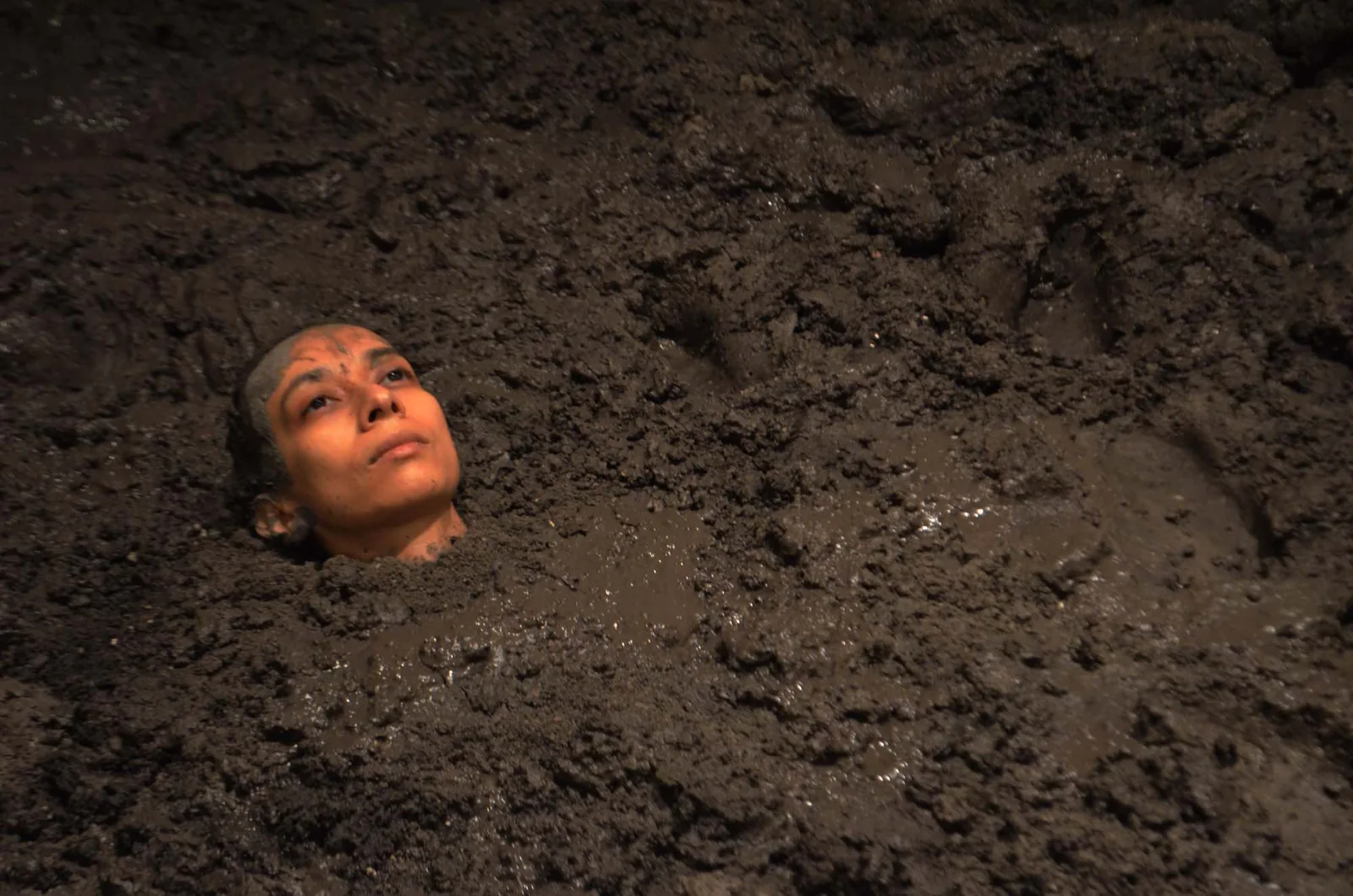
A political body is not a spectacular image
Physical extremity can be consumed as shock while context disappears. Galindo begins from Guatemala’s civil war, impunity and current structures of power. MASP describes her as a Latin American pioneer who sets her body against institutional violence.
Responsible collecting preserves text, date, place, photographic credits and exhibition history. Correct documentation keeps the connection between gesture, the people it invokes and the artist’s position.
A practical method before buying
Request invoice, certificate, provenance, edition number and size, print date, process, support, signature, condition report and conservation instructions. Compare only the same title, format and edition. Confirm the exact display rights.
Performance can produce a collectible object without becoming a financial promise. The strongest criterion is the relation between image and action: how clearly the work retains the political, formal and historical necessity of the original gesture.
Sources and further reading
Sources allow readers to verify and explore. Official artist links are part of the feature, not an appendix.
 ADV
ADVAcquistare Arte recommends: Resin-sealed books, words and layered images turn melancholy into a material narrative.
Painting · memory · collage
Open profile ↗