Guide · Method
How to read a contemporary artist’s career before choosing a work
Seven documentary signals for reading continuity, sources, exhibitions, language, provenance and price without predicting financial returns.
The short answer
Look for continuity of research, independent sources, contextualised exhibitions, documented works and coherent prices. None guarantees financial returns; together they reduce avoidable uncertainty.

1. Continuity, not age
A mid-career artist is not defined by age alone. What matters is whether ideas develop through recognisable phases rather than appearing as unrelated products.

2. Signed, verifiable sources
Distinguish an artist’s own biography from articles, interviews, catalogues and institutional records produced by third parties. Authorship and date are essential.
3. Exhibitions and context
A long exhibition list is useful only when places, curators, dates and participating artists can be checked. Context matters more than quantity.
4. A recognisable language
Recognition does not require repetition. A coherent practice can change medium while preserving recurring questions and decisions.
5. Documentation
Ask for title, year, medium, dimensions, signature, condition, provenance and edition details. Documentation protects the work’s history.
6. Coherent pricing
Prices should make sense across studio, gallery, dimensions, medium and career stage. Sudden unexplained differences are a question worth asking.
7. The remaining question
After the checks, one question remains personal: would you still want to live with the work if its price never increased?
Sources and further reading
Sources allow readers to verify and explore. Official artist links are part of the feature, not an appendix.
 ADV
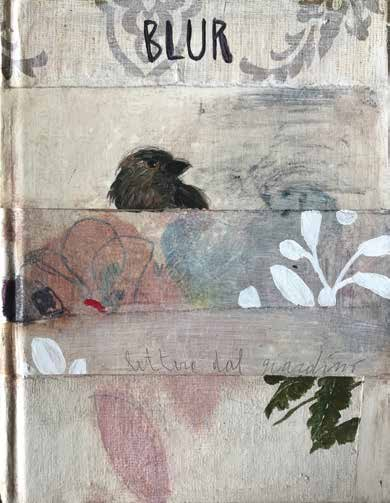
ADVAcquistare Arte recommends: Resin-sealed books, words and layered images turn melancholy into a material narrative.
Painting · memory · collage
Open profile ↗